

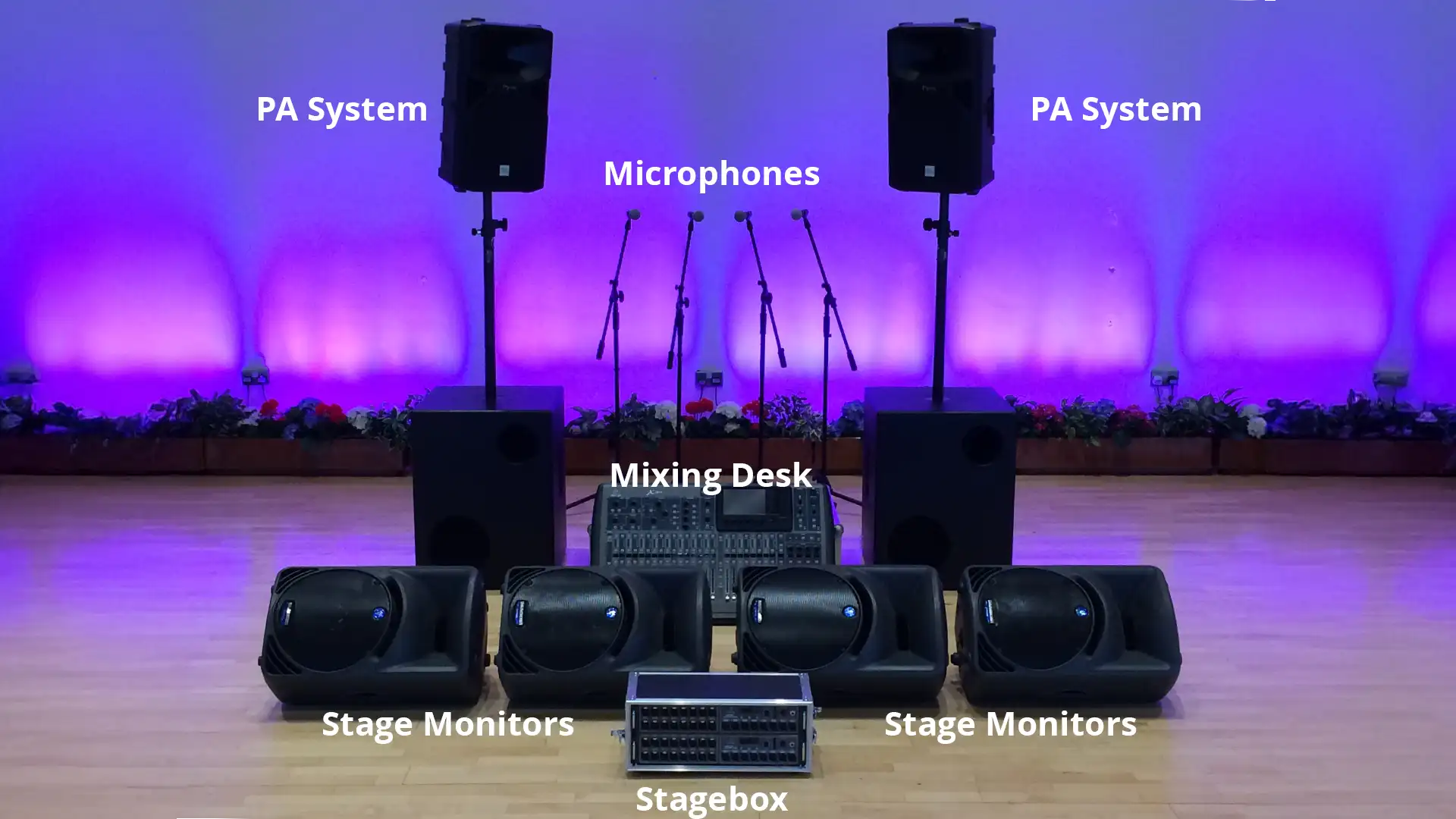
If you’re planning a live event, you will hear two common terms: PA system and stage monitors.
They sound similar, but they do very different jobs.
Here’s a simple explanation to help you understand what you really need.
“PA” stands for Public Address system.
It is the main sound system that sends audio to the audience.
A PA system includes:
Speakers facing the audience
Subwoofers (for bass)
Amplifiers
Microphones
A mixing desk
The goal of a PA system is simple:
➡️ Make sure everyone in the audience can hear clearly.
Stage monitors are speakers for the performers, not the audience.
They help musicians hear themselves while playing.
There are two common types:
Floor monitors (wedges on the ground, facing up)
In-ear monitors (earphones used by professionals)
Without monitors, musicians often cannot hear their voice, instruments, or timing — especially on loud stages.
Because the audience and the performers need different sound mixes.
For example:
The audience wants a balanced mix of all instruments.
A singer may only want to hear their own voice and a little bit of piano.
A drummer may need more bass and click track.
Musicians can’t hear properly, and the performance often becomes messy or off-time.
Even great bands struggle without good monitoring.
Yes – even for small gigs, monitors make the performance much easier and more enjoyable for the performers.
The PA system is for the audience,
and stage monitors are for the performers.
Both are important for creating a clear and professional live sound.
If you are unsure what you need for your event,we can recommend the right setup for your venue and band.
We use cookies and similar technologies to ensure our website works properly,
to analyse website usage, and to improve your experience.
You can accept all cookies, reject non-essential cookies, or manage your preferences at any time.